Phnom Penh: The capital and its history
- Lakes & rivers
- City
- History
- Markets
- Museums
- Temples
- Backpacker
Our rating
- Affordability
- Food
- Safety
- Transport
- Nature
- Beaches
- Nightlife
Phnom Penh sits where the Mekong meets the Tonlé Sap, and it carries the country's recent history more directly than anywhere else. Between 1975 and 1979 the Khmer Rouge emptied the city entirely. What visitors come to see is partly that story, and partly a capital that has spent the decades since rebuilding itself into a busy, likeable place.
The Khmer Rouge Sites
Tuol Sleng, a school converted into the S-21 prison, and Choeung Ek, the killing fields outside the city, are usually visited together in a half day. Take the audio guides at both — they are careful, first-hand and worth the extra hours. It is genuinely harrowing, and most people find they need the rest of the day to be quiet afterwards. Go in the morning, and don't plan anything demanding for the afternoon.
What Else to See
- Royal Palace and the Silver Pagoda — still the king's residence, with a floor of five thousand silver tiles; strict dress code
- National Museum — the best Khmer sculpture collection anywhere, and a calm courtyard to sit in
- Wat Phnom — the temple on the hill the city is named after
- Central Market — an art deco dome from 1937, good for a wander more than for shopping
- The riverside promenade at dusk, when the whole city seems to come out to walk
- Boat trips on the Mekong at sunset, cheap and pleasantly aimless
Getting Around and Onward
- Tuk tuks and the PassApp or Grab apps make getting around simple and cheap
- Buses and minivans run to Siem Reap (6 hours) and Sihanoukville for the islands (4-5 hours)
- Trains are slow but scenic to Sihanoukville and Battambang, and run only a few times a week
- Bag snatching from moving motorbikes is the one persistent risk: carry bags on the inside, away from the road, and don't use your phone at the kerb
Where to Eat and Stay
- Khmer classics — fish amok, lok lak, kuy teav noodle soup for breakfast
- Training restaurants run by NGOs teach hospitality skills to young Cambodians and are consistently good
- The riverside has the views and the prices; Boeung Keng Kang has the better food and the coffee shops
- Rooftop bars are cheap by regional standards and look out over the river
Two nights is enough. One for Tuol Sleng and Choeung Ek and nothing else, one for the palace, the museum and the riverside.
More in Cambodia
Siem Reap
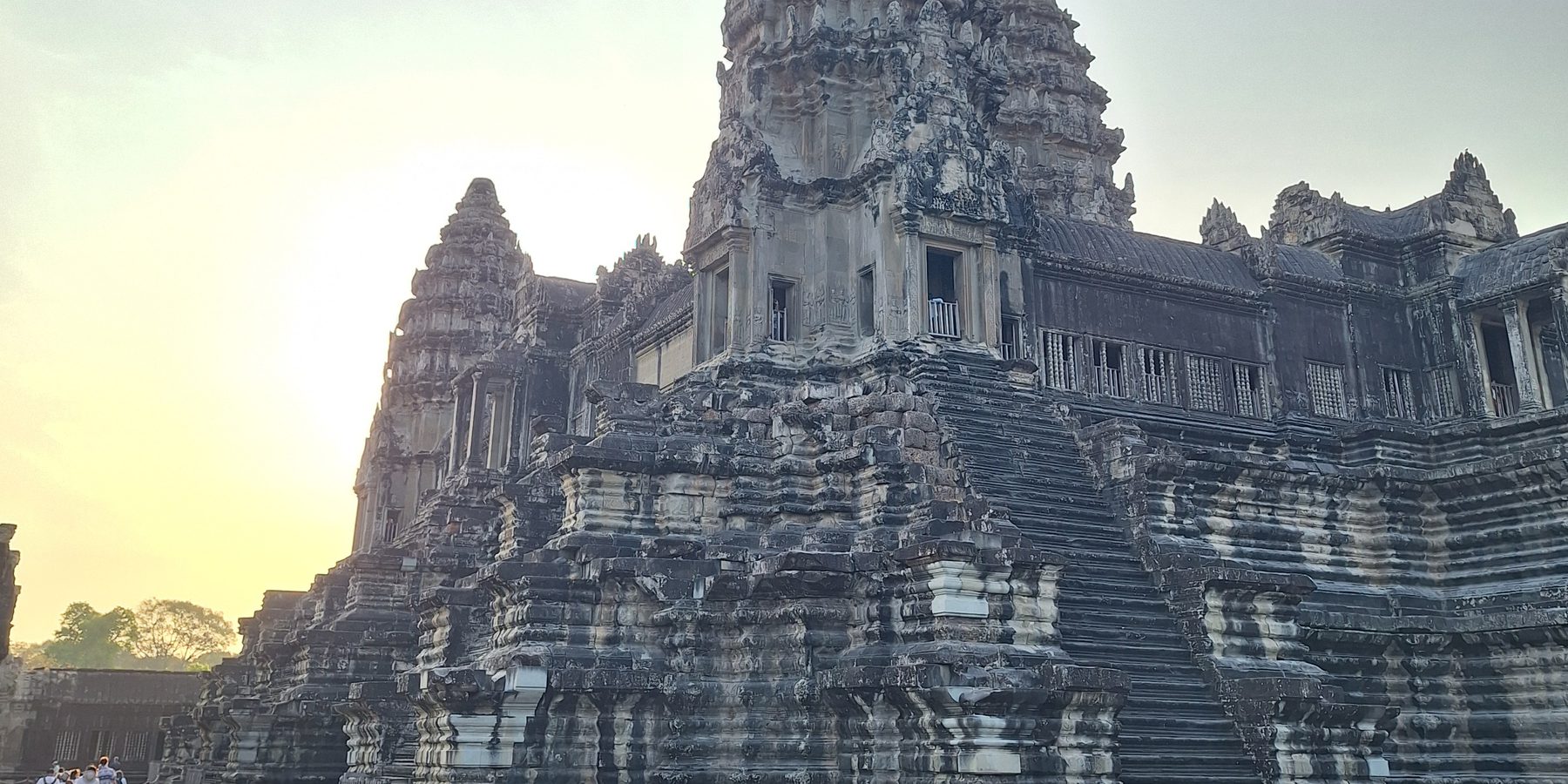
Angkor Wat, Bayon and a forest full of temples
Koh Rong
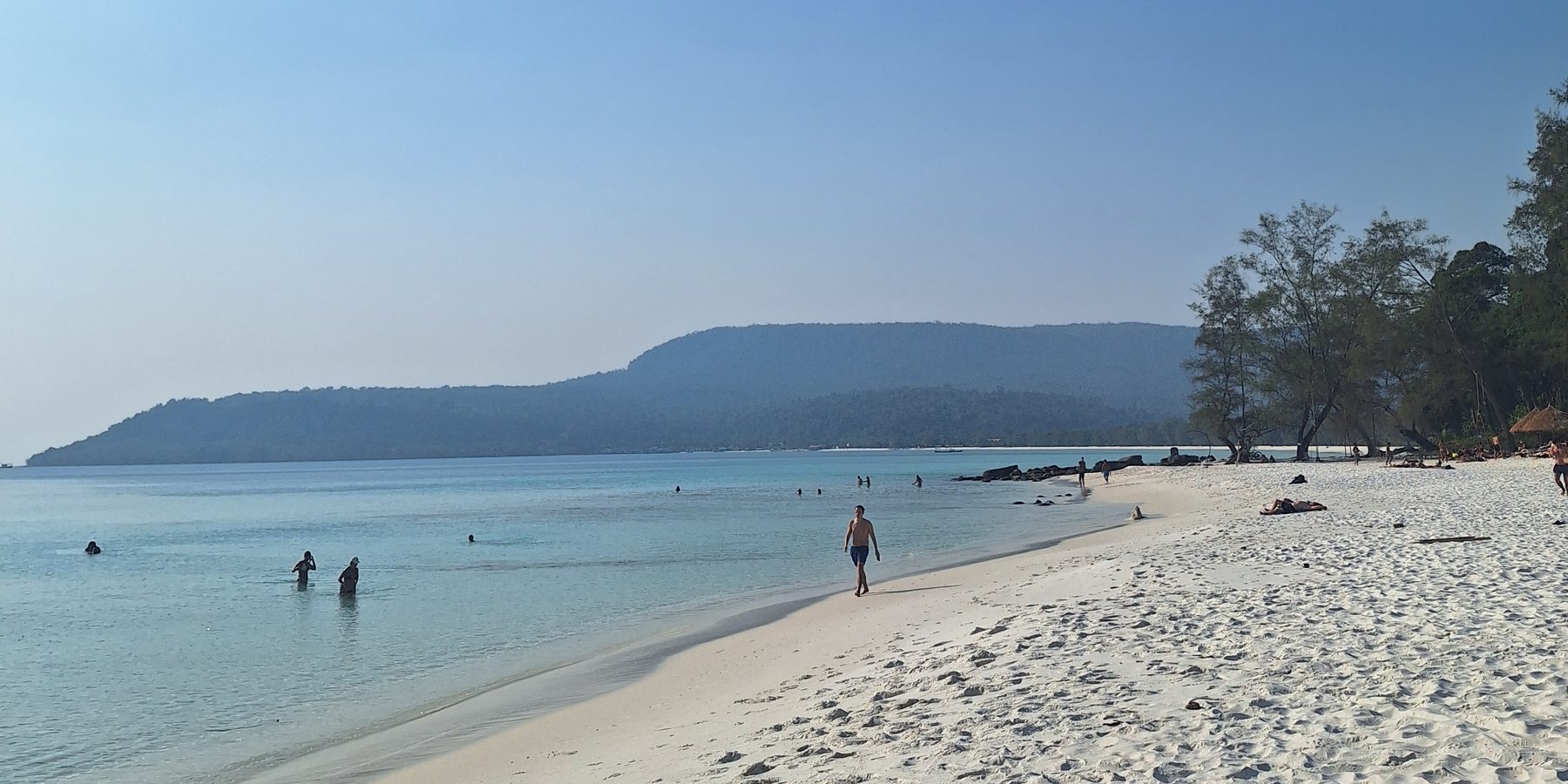
Long empty beaches at one end, late nights at the other
Koh Rong Samloem
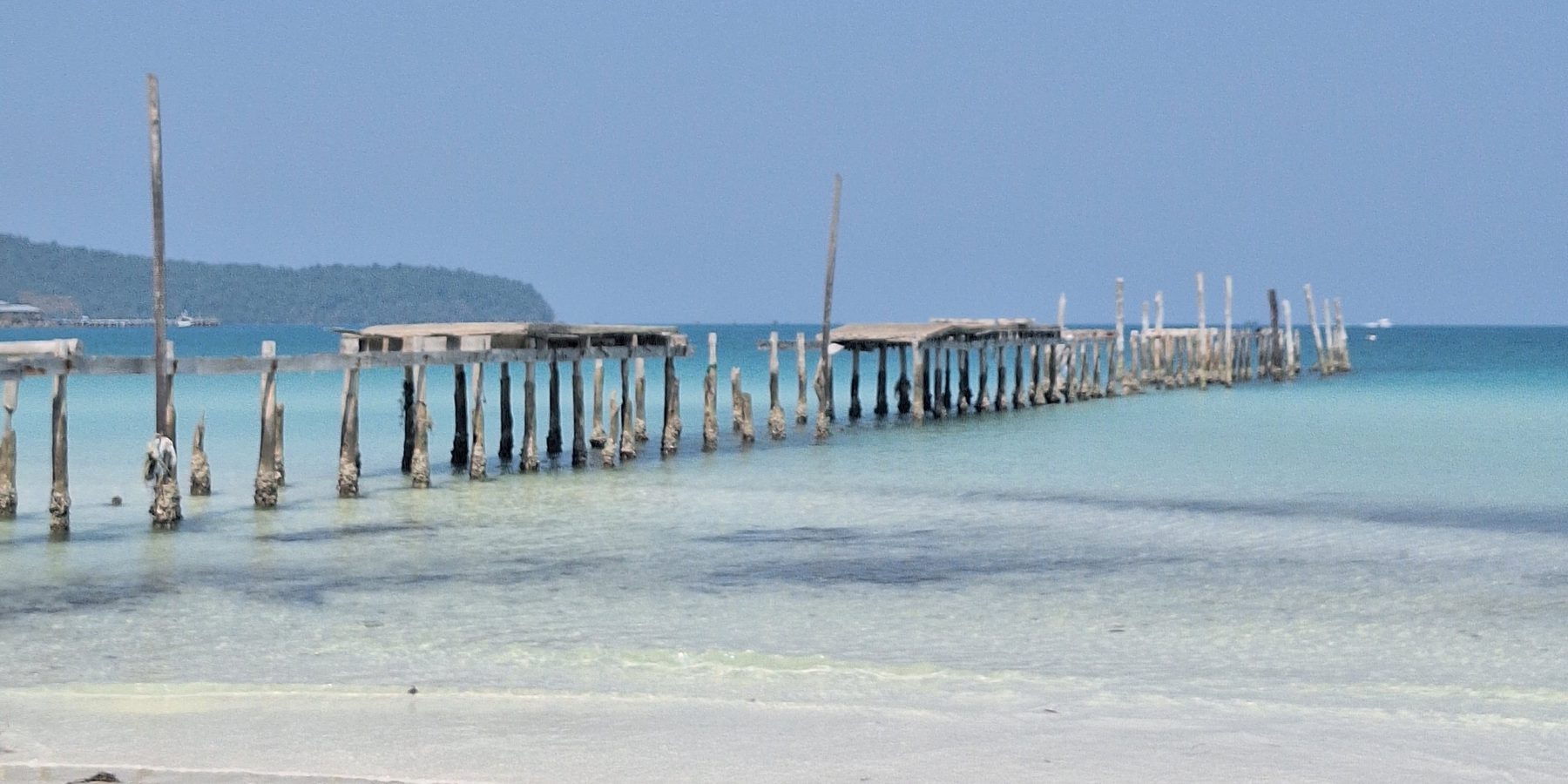
Saracen Bay, a jungle path to the sunset, and nothing to do